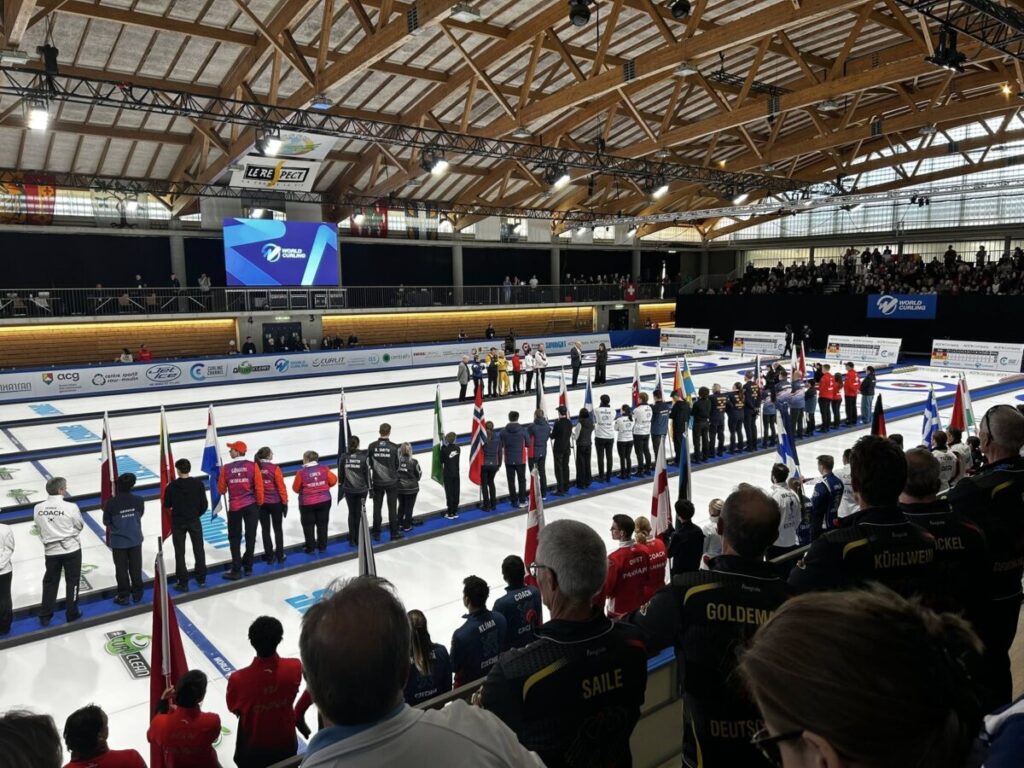
Quiet before the storm, gleaming ice, and a unique community that stands firmly together. The final tournament of the Czech Women’s Curling Championship in Prague–Roztyly shows that this unconventional sport is about much more than delivering stones with precision. It is about the invisible work of officials behind the scenes, the significant personal sacrifices of the players, and the transformation of a sport that is rapidly professionalizing and raising the bar for athletes. Join us as we look behind the scenes, where the tournament begins long before the first shot is played.
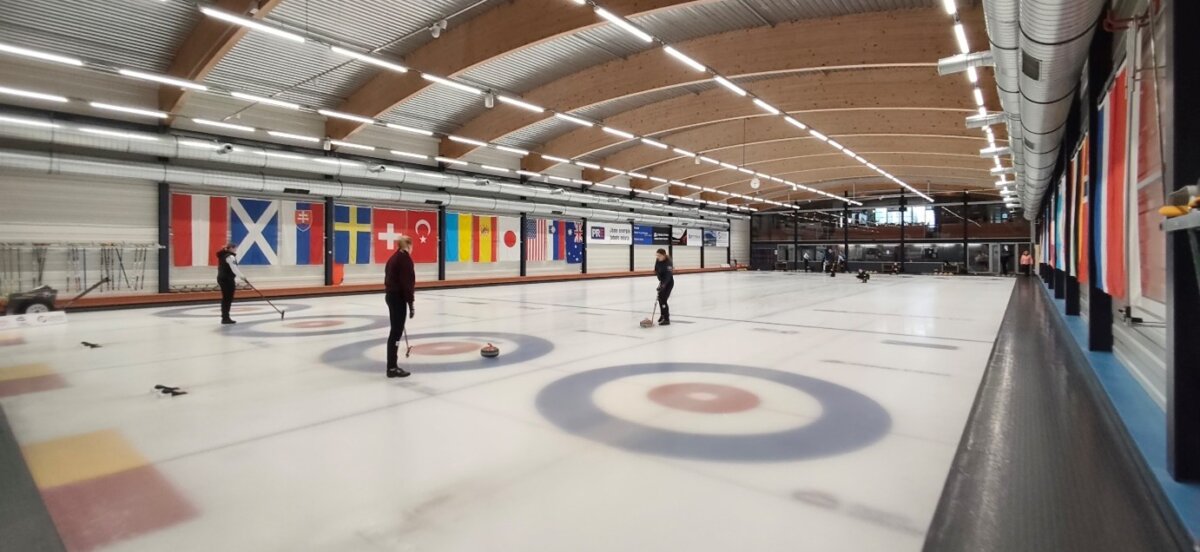
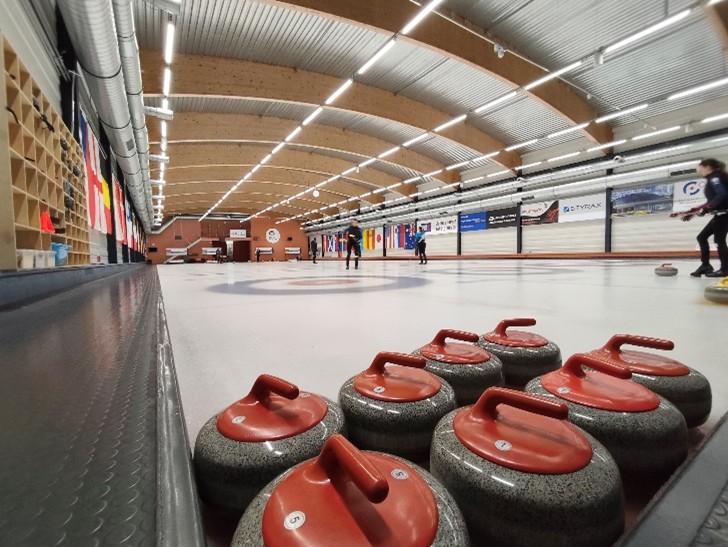
I arrive at the curling hall in Prague–Roztyly on Thursday, March 26th, just a few minutes before 3 PM. According to the schedule, the first training session is set to begin momentarily. At first glance, it seems as though nothing is happening—the unused ice gleams under the lights, the stands are silent, and only a few people are moving around the sheets. But the calm doesn’t last long. Within minutes, the space that appeared empty begins to fill with voices, movement, and the rhythm that will dictate the rest of the afternoon.
This is where, over the next several days, the final tournament of the Czech Women’s Curling Championship will take place, alongside junior and senior competitions. The best women’s teams in the country meet here, young players at the start of their careers, and experienced curlers who have stayed with the sport for decades. Thursday’s program is dedicated mainly to training sessions and the opening women’s matches, but even within the first moments, it’s clear that the tournament doesn’t begin with the first stone—it starts much earlier.
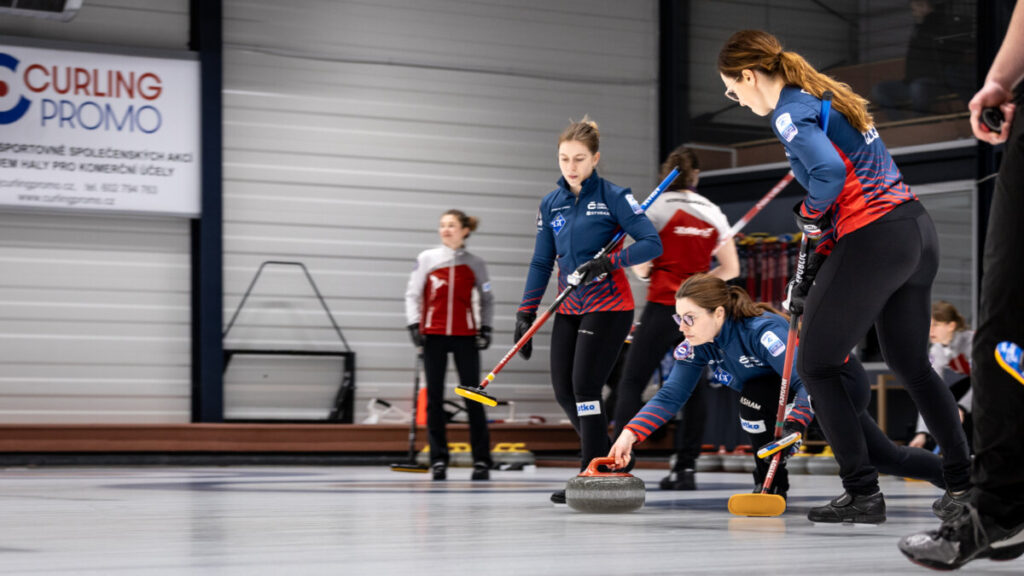
Training follows a strict structure. Thirty minutes for two teams, no delays. On sheets two and three, Dion XX and Kolibris 7 take turns, followed by Liboc 3 and Savona H. There is practically no break between the slots—just a quick sheet swap, and the next group steps on. One of the officials calls out regularly through the hall: “One minute left, one minute to start.” Meanwhile on the ice, the same sequences repeat, accompanied by coaches’ instructions: “Six hits there, six back.” Everything has its rhythm and precision.
At first glance, the training sessions look relaxed. The players laugh, stretch, chat with each other. Everyone here knows everyone else; they’re on first‑name terms, greeting one another with hugs. The atmosphere feels more like a community gathering than a top-level sporting event. But once the series of throws starts, everything settles. Only concentration remains—focused communication and the numbers calling out the speed of each throw: “Nine, ten.” In those thirty minutes, players fine-tune the details that will later decide the evening matches.
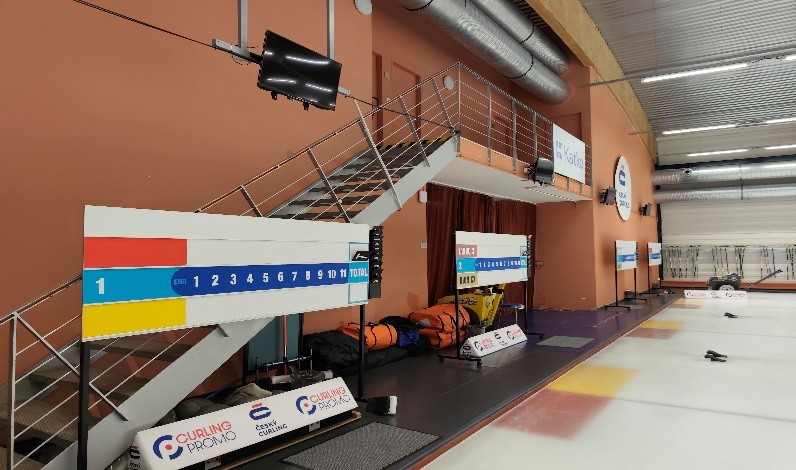
On one of the sheets, the players automatically clean the bottoms of the stones after each throw, while a coach next to them replaces a broom head after the session. These are the details spectators never see—but they are vital for performance. Young players slip into the back room between training blocks to quickly deal with school assignments during the short break, while just a few meters away another team is already fine‑tuning its last shots.
The tournament begins long before the first shot
While training is underway on the ice, completely different things are being handled backstage. Referees arrive from various parts of the country—some even travelling from Brno—to ensure they are on-site in time. Several of them arrive before the training sessions begin and jump straight into work. They check team rosters, manage the timing system, assign sheets, and prepare the structure of each match. Sometimes, they deal even with basic matters that elsewhere might be taken for granted. “There won’t be a timing system on sheet two,” someone notes during preparations—an apparent triviality, yet one that can significantly affect the course of a game.
“Usually there are two of us here. The job is always easier that way. When you’re alone, that’s too much work,” one of the referees says, describing the demands of the role. He explains that their job isn’t only about watching the game. “The most common tasks we handle here are monitoring the timing system and measuring stones in the house,” he adds.
These details—almost invisible during the match—are what ensure the fairness and integrity of the entire tournament. In one of the rooms, the trophy is already waiting, polished and ready. Elsewhere, officials are addressing equipment or small issues, such as the timing device for a specific sheet. A tournament does not begin with the first stone—it begins long before that.
The ideal age to start? The sport has dramatically gotten younger
Curling in the Czech Republic is not a sport with a clear or straightforward entry path. Most players discover it more or less by accident. “I got into curling through my sister, who saw it during the Olympics,” says Michaela Baudyšová from team Liboc 3. She started around the age of fifteen, and only a few years later she was already part of the national team. “I think you can reach a really high level even if you start at eighteen,” she adds.
This rather optimistic view is challenged by Petr Horák, coach of the rival team Dion XX. According to him, curling has shifted and become significantly younger on a global scale. “Back then, starting at twenty was fine, but it was a completely different league. Now the level is so high that the ideal starting age is between eight and twelve,” Horák explains. He points out that while the world’s top teams used to be dominated by players in their forties, today world championships are won by athletes around twenty‑two years old. Trying to catch up on missing technique at a later age, he says, has become extremely difficult.
This creates a unique blend of stories all meeting on the same tournament stage. Juniors, elite female athletes, and men over fifty — each with different experiences, different beginnings, and different motivations, yet all sharing the same sheets of ice. In this sense, curling feels different from most other sports. But the same rule applies: if you want to succeed, you must devote a substantial part of your life to it.
From work straight to the ice — and the challenge of missing infrastructure
Behind the relatively calm image on the ice lies an everyday routine that is far from comfortable. Evening practices, work during the day, and almost no free time. “I get up at 6:30, go to work, then I go for a run, and from seven to nine I’m at curling,” says Baudyšová, describing her usual day. Balancing the sport with a full‑time job is, according to her, extremely demanding. “It’s really tough… every season I think about quitting,” she admits.
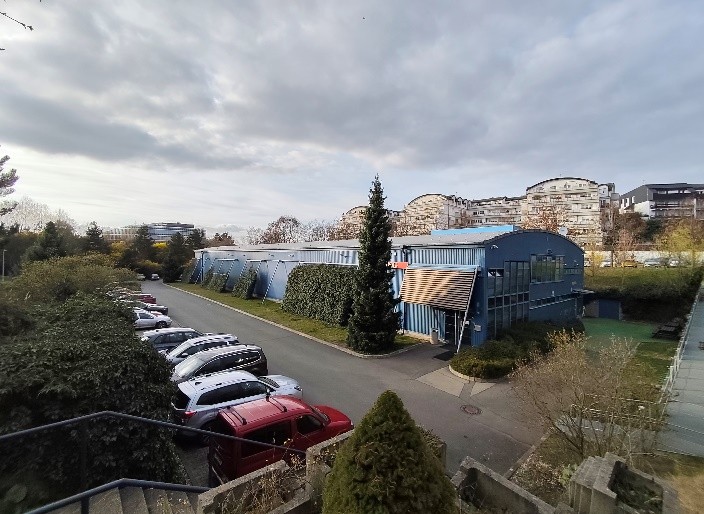 On top of that comes the reality of the conditions under which curling is played in the Czech Republic. Number of facilities is limited, and the sport is played in only a handful of cities — in some places even on modified hockey rinks. According to coach Petr Horák, infrastructure is one of the biggest challenges. “If you want to compete at a good level, you have to sacrifice both time and money,” he explains. Curling may not be as expensive as some other winter sports, but it is impossible to progress without personal commitment.
Despite all of this, curling has one distinctive feature that sets it apart: the atmosphere. Disputed situations are resolved directly by the players, without the need for a referee’s intervention. “Most of the time, the teams manage to agree on their own,” says one of the officials. “It should always follow the spirit of fair play.” Even between matches, the environment remains relaxed. Players move to the on‑site restaurant, watch the other teams practice, and chat with one another. Teams even buy drinks for each other. Equipment for the public lies next to the sheets, showing an effort to open the sport to a wider audience.
Shortly after five o’clock, the matches begin. Two games run simultaneously, the clock is ticking. What had previously unfolded at a calm pace suddenly takes on a clear competitive frame. Yet the feeling remains that most of the important things have already happened—during the training sessions, in the preparations, and behind the scenes.
When the lights go out shortly after 7:30 p.m., the ice is left empty. Silence returns just as quickly as it disappeared a few hours earlier. What the spectator sees during a match is only a fraction of the full story. The rest takes place away from the cameras — in the players’ daily routines, in the work of the referees, and even in the improvisation that holds the entire tournament together. Curling in the Czech Republic is not just a sport; it is above all a community of people who keep it alive.
Author: Patrik Hlaváč. Translated from original text in Czech.